Sally Mann
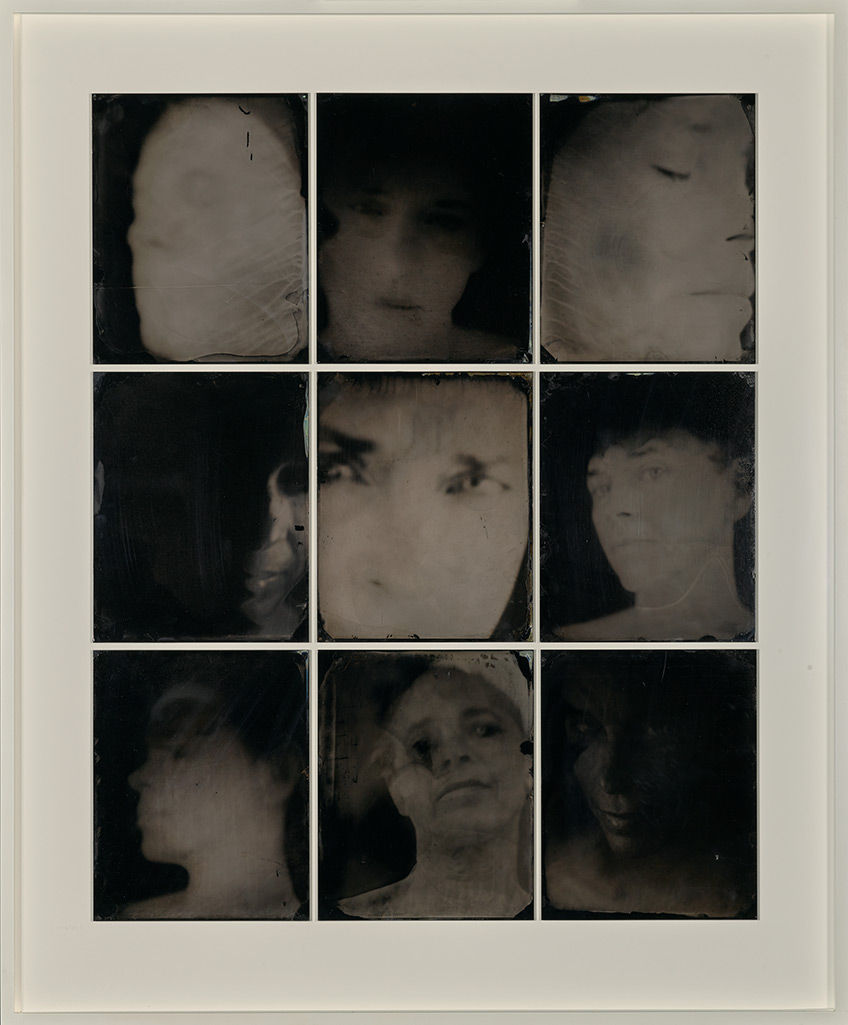
Untitled (Self-Portrait), 2012
Tintypes
Copyright Sally Mann
$ 2,000.00
In the late 1990s, Mann began to make glass negatives using the collodion wet-plate process, a nineteenth-century technique that involves coating a glass plate with a syrupy substance called collodion...
In the late 1990s, Mann began to make glass negatives using the collodion wet-plate process, a nineteenth-century technique that involves coating a glass plate with a syrupy substance called collodion and a light-sensitive solution of silver salts. She found that working with the historic method helped infuse her pictures with a sense of the past.
Mann started exploring variations on the collodion process in the 2000s. She began making ambrotypes and tintypes, underexposed collodion negatives that read as positive images against a dark background. An ambrotype is formed when the glass plate is tinted, blackened with lacquer on one side, or displayed on a black surface. A tintype is produced on a thin sheet of black-lacquered metal instead of glass. Because these photographs are made directly on glass or metal rather than printed in multiples from negatives, ambrotypes and tintypes are one of a kind.
Mann started exploring variations on the collodion process in the 2000s. She began making ambrotypes and tintypes, underexposed collodion negatives that read as positive images against a dark background. An ambrotype is formed when the glass plate is tinted, blackened with lacquer on one side, or displayed on a black surface. A tintype is produced on a thin sheet of black-lacquered metal instead of glass. Because these photographs are made directly on glass or metal rather than printed in multiples from negatives, ambrotypes and tintypes are one of a kind.